
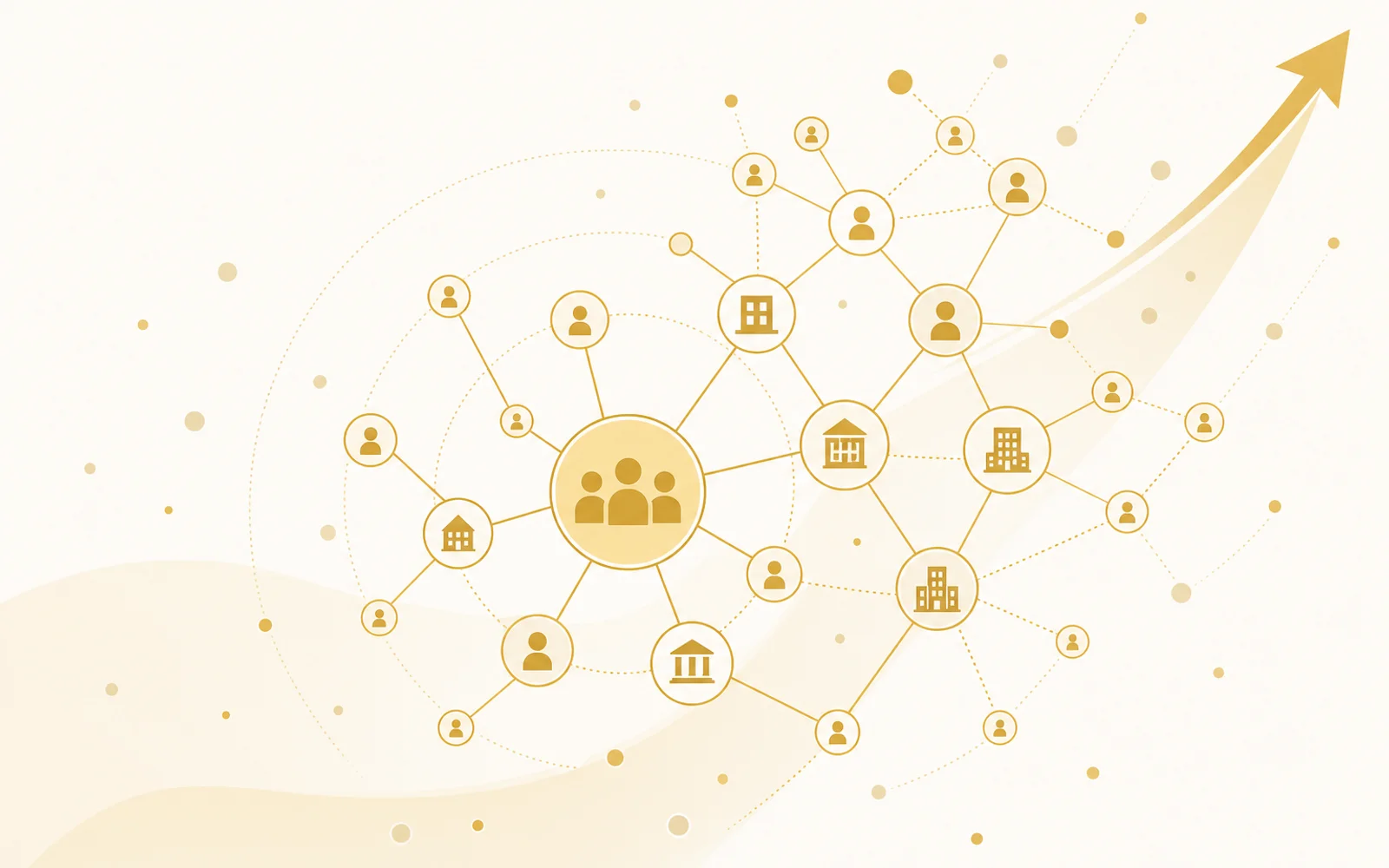
The most common partnership mistake we see is treating collaboration like a campaign — a single pop-up, a co-branded post, a launch weekend — and then wondering why the momentum fades. In 2026, the brands and organisations pulling ahead are doing something different. They are building partnerships as infrastructure: repeatable formats, shared standards, and long-term alignment that compounds over time.
This shift is visible across influencer marketing, experiential strategy, and community programmes. One-off sponsored placements still happen, but the strongest returns come from always-on relationships — creators who understand your brand across multiple cycles, venues that host recurring activations, and agencies that know your briefing standards well enough to deploy crews in four cities without reinventing the wheel each time.
The reason is simple. Transactional partnerships optimise for a moment. Structural partnerships optimise for learning. When you work with the same team across several campaigns, you test what hooks work, which formats convert, and where operational friction slows you down. You stop starting from zero every quarter and start building a playbook.
For South African brands, agencies, and community organisations, this matters enormously. Budgets are tight. Timelines are compressed. And the talent pool — whether that means creators, promoters, or strategic partners — is more competitive than ever. Scaling without infrastructure leads to the predictable collapse: missed briefs, inconsistent delivery, payment delays, and relationships that never deepen because every engagement feels like a first date.
The partnerships that scale share three traits. First, values alignment that goes beyond a shared press release. The best collaborations feel native to both brands' audiences because the ethos actually matches — not because a deck said "synergy." Second, repeatable formats. A culinary residency series, a quarterly mall activation programme, a roadshow template with consistent packs and check-ins — these structures let you plan against a full year rather than scrambling for the next tentpole. Third, clear ownership on both sides. Who briefs the crews? Who handles compliance? Who measures results? Ambiguity kills scale faster than a small budget ever will.
Creator and community partnerships follow the same logic. Micro-communities and niche creators now outperform mega-reach for trust and conversion in many categories. But managing fifty relationships with spreadsheets and goodwill alone does not scale. The teams winning in 2026 invest in systems — shared briefs, structured testing, content libraries that compound, and contracts built for long-term use rather than single posts.
Experiential partnerships are increasingly central to this model. Co-branded activations work best when both partners bring something the other cannot easily replicate: access to audience, venue footprint, production capability, or on-ground execution at national scale. The result is not just a busier event. It is a durable exchange of equity — guests gain a richer experience, and both brands extend reach into audiences they could not reach alone with the same credibility.
At Alter Ego SA, our mission is rooted in empowering young entrepreneurs and partnering with organisations doing meaningful work. That only scales when partnerships are intentional. We look for collaborators who care about execution as much as strategy — brands that want crews briefed properly, activations measured honestly, and identity systems that hold up from digital to in-store to on-the-ground.
If you are exploring a partnership this year, resist the urge to jump straight to tactics. Start with alignment: do we serve the same audience with complementary strengths? Then design for repetition: what format could we run three times in twelve months and improve each cycle? Finally, build the operational layer early — briefing standards, communication rhythms, and success metrics both sides agree on before the first activation goes live.
Partnerships that scale are not louder. They are more consistent. In a market where everyone is chasing the next viral moment, the organisations building standing pillars — not campaign spikes — are the ones still growing when the trend cycle moves on.
We are always looking for great collaborations across South Africa: brands, agencies, venues, and organisations that share our belief that opportunity is everywhere. If that sounds like your team, we would love to hear what you are building.